
Bob Mager’s Was Only Half Right about Learning Objectives
This is NOT a post about Bob Mager. It is something else entirely.
In probably the best video I will ever create, I made the case that learning professionals and learners should NOT receive the same set of learning objectives.
The rationale is this: Because objectives are designed to guide behavior, how could one statement possibly guide the behaviors of two separate audiences? Sometimes maybe! But not always!
Arguments for the Infallibility of an Instructional-Design Hero
Recently, I’ve heard it argued that Bob Mager, in his classic text, “Preparing Instructional Objectives,” urged us to create instructional objectives only for us as learning professionals, that he never intended that instructional objectives be presented to learners. This is a testable assertion, which is great! We can agree that Mager gave us some good advice on how to craft objectives for ourselves as learning professionals. But did Mager also, perhaps, suggest that objectives could be presented to learners?
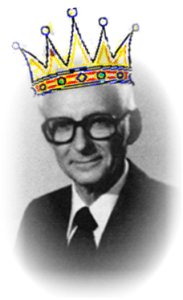
Here are several word-for-word quotes from Mager’s book:
Page 16: Heading: “Goal Posts for Students”
Page 16: “Clearly defined objectives also can be used to provide students with the means to organize their own time and efforts toward accomplishment of those objectives.”
Page 17: “With clear objectives, it is possible to organize the instruction itself so that instructors and students alike can focus their efforts on bridging the gap…”
Page 19: Chapter Summary. “Objectives are useful for providing: … Tools for guiding student efforts…”
Page 43: “Objectives in the hands of students prevent the students from having to guess at how they might best organize their time and effort.”
So Mager clearly started the confusion! But Mager wrote at a time before research on cognition enabled greater insight.
Forget Mager’s contribution. The big problem is that the most common practice seems to still be efforts to create a set of learning objectives to use for both learners and learning practitioners.
Scolded
I was even scolded for not knowing the difference between an instructional objective (for learning professionals) and a learning objective (for learners). Of course, these revisionist definitions are not true and are not helpful. They are fake news, concocted perhaps by a person who thinks or was taught that our instructional-design heroes are perfect and their work is sacrosanct. The truth is that these terms have been used interchangeably. For example, in a research study by my mentor and academic advisor, Ernie Rothkopf, he and his research partner used the term instructional objectives to refer to objectives presented to learners.
Rothkopf, E. Z., & Kaplan, R. (1972). An exploration of the effect of density and specificity of instructional objectives on learning from text. Journal of Educational Psychology, 6, 295-302.
My Main Points
- We need at least two types of objectives (although I’ve argued for more)—one to guide the design, development, and evaluation of learning; one to guide learners as they are learning. I’ve called these “focusing objectives,” because the research shows that they guide attention toward objective-relevant content.
- When we make arguments, we ought to at least skim the sources to see if we know what we’re talking about.
- We ought to stop with hero worship. All of us do some good things and some bad things. Even the best of us.
- Hero worship in the learning field is particularly problematic because learning is so complex and we all still have so much to learn. All of us attempting to make recommendations are likely to be wrong some of the time.
- It is ironic that our schools of instructional design teach graduate students to memorize facts and hold up heroes as infallible immortals—when instead they ought to be educating these future citizens how progress gets made over long periods of time by a large collective of people. They also ought to be teaching students to understand at a deeper level, not just a knowledge level. But truly, we can’t blame the schools of instructional design. After all, they started with canonically-correct instructional objectives (focused on low-level knowledge because they are easier to create).
Finally, let me say that in the video I praise Bob Mager’s work on learning objectives for us learning professionals. This post is not about Mager.
You must be logged in to post a comment.